Fire Up Your Personal Altar

The altar is the place of deep interaction with God; it’s a place purposely set apart when we need to bring God into our affairs. Therefore, the altar is considered a sacred creation for the purpose of pursuing a spiritual agenda for personal fulfillment. In Genesis Chapter 8, we see Noah building an altar unto the Lord, just after leaving the ark.
And Noah builded an altar unto the LORD; and took of every clean beast, and of every clean fowl, and offered burnt offerings on the altar (Gen 8:20).
There are about 400 references to the altar in the bible, making the building of altars a popular and acceptable mode of worship by believers through the ages. In almost all cases, altars are built on the initiative of a person under the guidance of the Holy Ghost.
Therefore, most altars are personal, even though corporate altars are also possible.
So, why are altars important? They are important because they represent an exclusive covenant relationship, which precludes others not connected to the altar in our relationship with God. It is the acceptable platform on which offerings such as sacrifices are made for religious purposes. Even when a sacrifice is duly offered unto the Lord, it would matter on what altar the sacrifice has been made. In Genesis 4:3-4, when Cain and Abel brought their sacrifices to the Lord. They most likely presented their offerings on some type of altar, even though the word altar is not used in that passage.
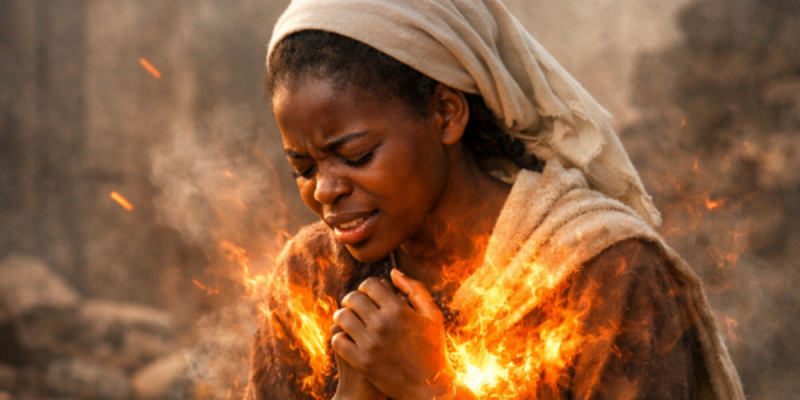
The altar also represents a place of consecration. A person builds an altar out of a desire to consecrate himself fully to the Lord. God had worked in a person’s life in such a way that the person desired to create something tangible to memorialize it.
Examples of patriarchs who built altars after experiencing God with profound impact are Abram (Genesis 12:7), Isaac (Genesis 26:24-25), Jacob (Genesis 35:3), David (1 Chronicles 21:26), and Gideon (Judges 6:24).
Sometimes God Himself commanded that an altar be built after He had delivered someone in a miraculous way (Deuteronomy 27:4-7; Exodus 30:1). Such an altar would be a memorial to help future generations remember the mighty works of the Lord. The earliest altars were made from the earth or from natural uncut stones. Anything else was a defilement;
“Ye shall not make with me gods of silver, neither shall ye make unto you gods of gold. An altar of earth thou shalt make unto me, and shalt sacrifice thereon thy burnt offerings, and thy peace offerings, thy sheep. and thine oxen: in all places where I record my name I will come unto thee, and I will bless thee. And if thou wilt make me an altar of stone, thou shalt not build it of hewn stone: for if thou lift up thy tool upon it, thou hast polluted it. Neither shalt thou go up by steps unto mine altar, that thy nakedness be not discovered thereon.” (Exodus 20:23-26).
It is significant to note that not only was the pattern and make-up of altars usually given by the Lord, but altars that fell into disrepair or defilement could also be repaired by the intervention of the Lord. For example, during the times of Israel’s rebellion and idolatry, the Lord’s altars fell into disrepair. The prophet Elijah, confronting the prophets of Baal on Mt. Carmel, “repaired the altar of the Lord, which had been torn down” (1 Kings 18:30).
Elijah’s restoration of the altar was significant, given the rampant paganism of his day. Also, in spite of the fact that he was living in a divided kingdom, the prophet symbolized the unity of God’s people in his construction: “Elijah took twelve stones, one for each of the tribes descended from Jacob, to whom the word of the Lord had come, saying, ‘Your name shall be Israel.’ With the stones he built an altar in the name of the Lord” (1 Kings 18:31-32). It was on this rebuilt altar that God rained down fire and put the Baal-worshipers to shame (verses 38-39).
Today, many church buildings have “altars” for prayer, communion, weddings, and other sacred purposes. After the experience of salvation, every believer is also now expected to present himself a living sacrifice (Romans 12:1) and hence, it has become necessary for Christians to build for themselves altars for personal and communal worship of God. The difference is that our personal altars don’t have to be concrete objects or surface, as we can surrender ourselves on the altar of our hearts at any time.
There was and there still is a nexus between altars and fire. The presence of fire on the altar is to remind mankind of the reality and presence of God. When there is no fire on the altar, it means that God cannot be there. How can He that said He will spew out of his mouth anyone who is neither hot nor cold be lukewarm? A lack of fire will show in the form of prayerlessness and worse, in the results from that negative spiritual state. From time immemorial, the power in an altar shows in the life of the fire on that altar. It is God’s command that the altar must burn continually;
“And the LORD spake unto Moses, saying, command Aaron and his sons, saying. This is the law of the burnt offering: It is the burnt offering, because of the burning upon the altar all night unto the morning, and the fire of the altar shall be burning in it. And the priest shall put on his linen garment, and his linen breeches shall he put upon his flesh, and take up the ashes which the fire hath consumed with the burnt offering on the altar, and he shall put them beside the altar. And he shall put off his garments, and put on other garments, and carry forth the ashes without the camp unto a clean place. And the fire upon the altar shall be burning in it; it shall not be put out: and the priest shall burn wood on it every morning, and lay the burnt offering in order upon it; and he shall burn thereon the fat of the peace offerings. The fire shall ever be burning upon the altar; it shall never go out.” (Leviticus 6:8-13).
Beloved, the fire should never go out of your altar; you need the fire as a sign of the power of the altar. An altar without the fire exposes the altar to mockery from the camp of the enemy. This explains the reasons why many of us labour in prayers without results; there is no fire, there is no covenant and there is no glory;
Now when Solomon had made an end of praying, the fire came down from heaven, and consumed the burnt offering and the sacrifices; and the glory of the LORD filled the house. And the priests could not enter into the house of the LORD, because the glory of the LORD had filled the LORD’S house. And when all the children of Israel saw how the fire came down, and the glory of the LORD upon the house, they bowed themselves with their faces to the ground upon the pavement, and worshipped, and praised the LORD, saying, For he is good; for his mercy endureth for ever. Then the king and all the people offered sacrifices before the LORD. (2 Chr. 7:1-4),
We are in the time when the glory of the Lord needs to fill our altar; fill our temples and fill our lives.
We need the fire to refine and purify us; that is the fullness of sanctification. (Malachi 3:1- 6).
Today, not only is the fire on many altars gone out, but men are now consciously building altars with strange fire! They are behaving like Nadab and Abihu, Aaron’s sons who profaned the altar of God by bringing strange fire upon the altar. Of course, God rejected their sacrifice and consumed them by fire. The fire on the altar carries its own judgement:
And Nadab and Abihu, the sons of Aaron, took either of them his censer, and put fire therein, and put incense thereon, and offered strange fire before the LORD, which he commanded them not. And there went out fire from the LORD, and devoured them, and they died before the LORD. Then Moses said unto Aaron, This is it that the LORD spake, saying, I will be sanctified in them that come nigh me, and before all the people I will be glorified. And Aaron held his peace. (Leviticus 10:1-3)
It’s time for us to stay on the right side of God’s judgement as we fire up our personal altars.